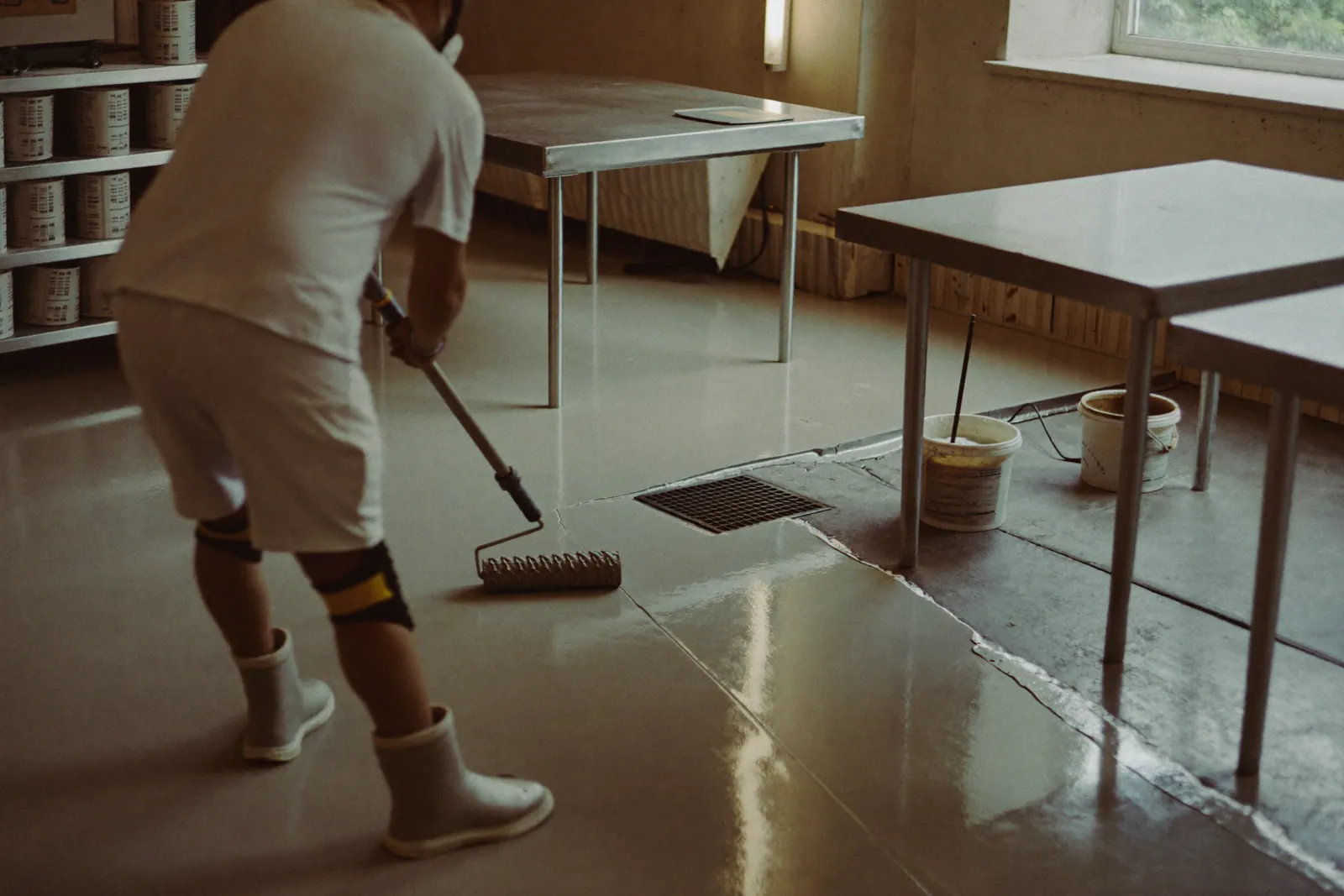
Epoxy flooring for San Francisco garages, lofts and commercial kitchens — installed over concrete that's diamond-ground and moisture-tested first, so the coating bonds to the slab and stays put.
Call Now for a Free EstimateTell us about the floor and we'll call you back the same working day.
Prefer to talk? Call (415) 792-5106
Epoxy flooring is a two-part resin coating that bonds to bare concrete and hardens into a seamless, easy-to-clean surface. In San Francisco, most of these floors go into the garages built under homes, but they also cover loft offices, retail floors, breweries and restaurant kitchens.
The resin is mixed on site and spread over a slab that has been diamond-ground, so it can soak in and lock on. A clear topcoat goes on last and takes the daily wear from tires, carts and foot traffic.
Homeowners usually call when the garage floor is dusty, stained or covered in peeling paint. Business owners call when a floor has to stand up to spills, hot water and a health inspection.
Four coating systems, all built on the same careful prep. Pick the one that matches how you use the space.
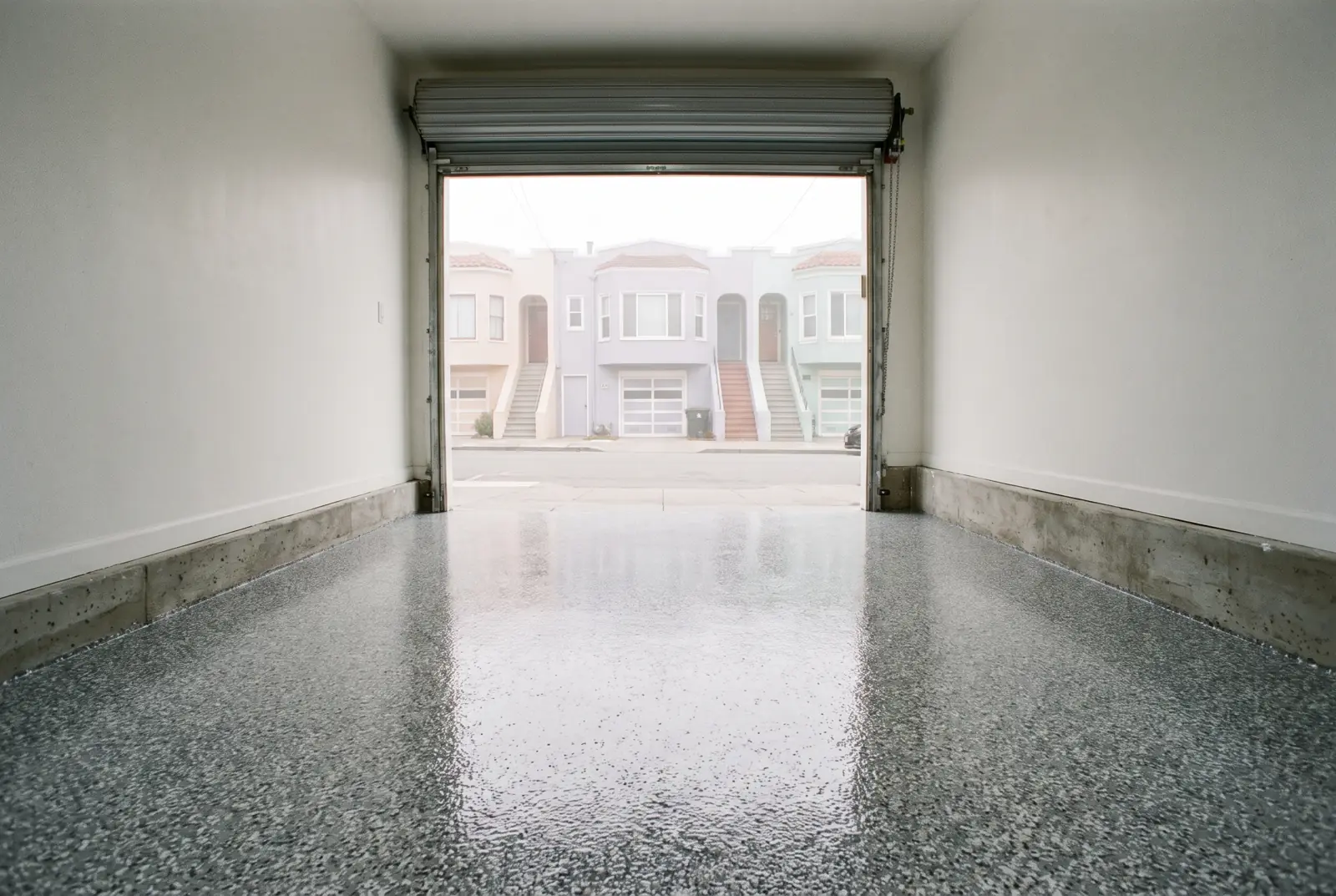
A flake system over a ground slab, sealed with a clear topcoat that handles hot tires, oil drips and wet shoes.
Garage floor epoxy details
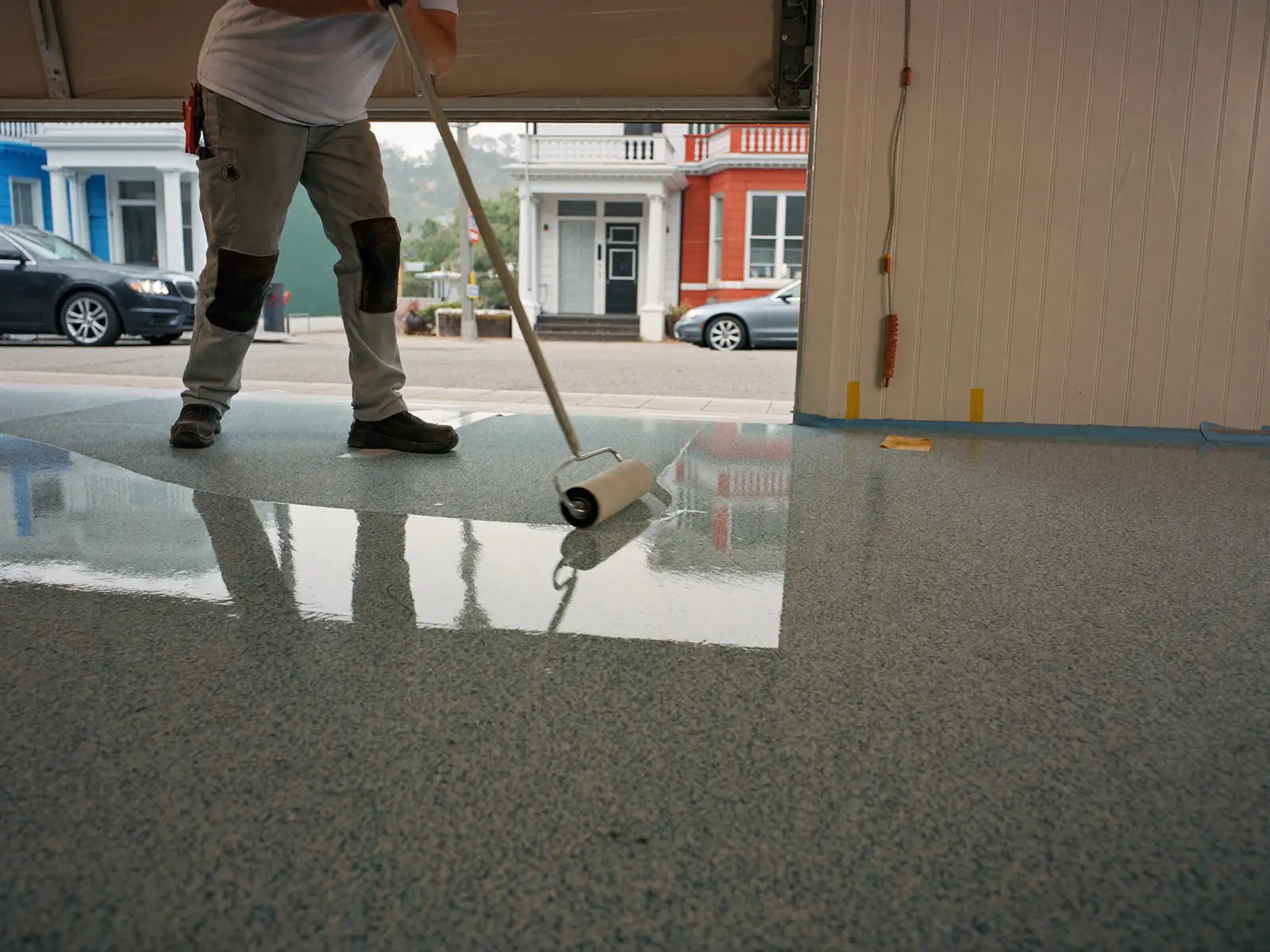
A fast-curing, UV-stable system that handles cool temperatures and can have the car back inside the next day.
Polyaspartic coating details
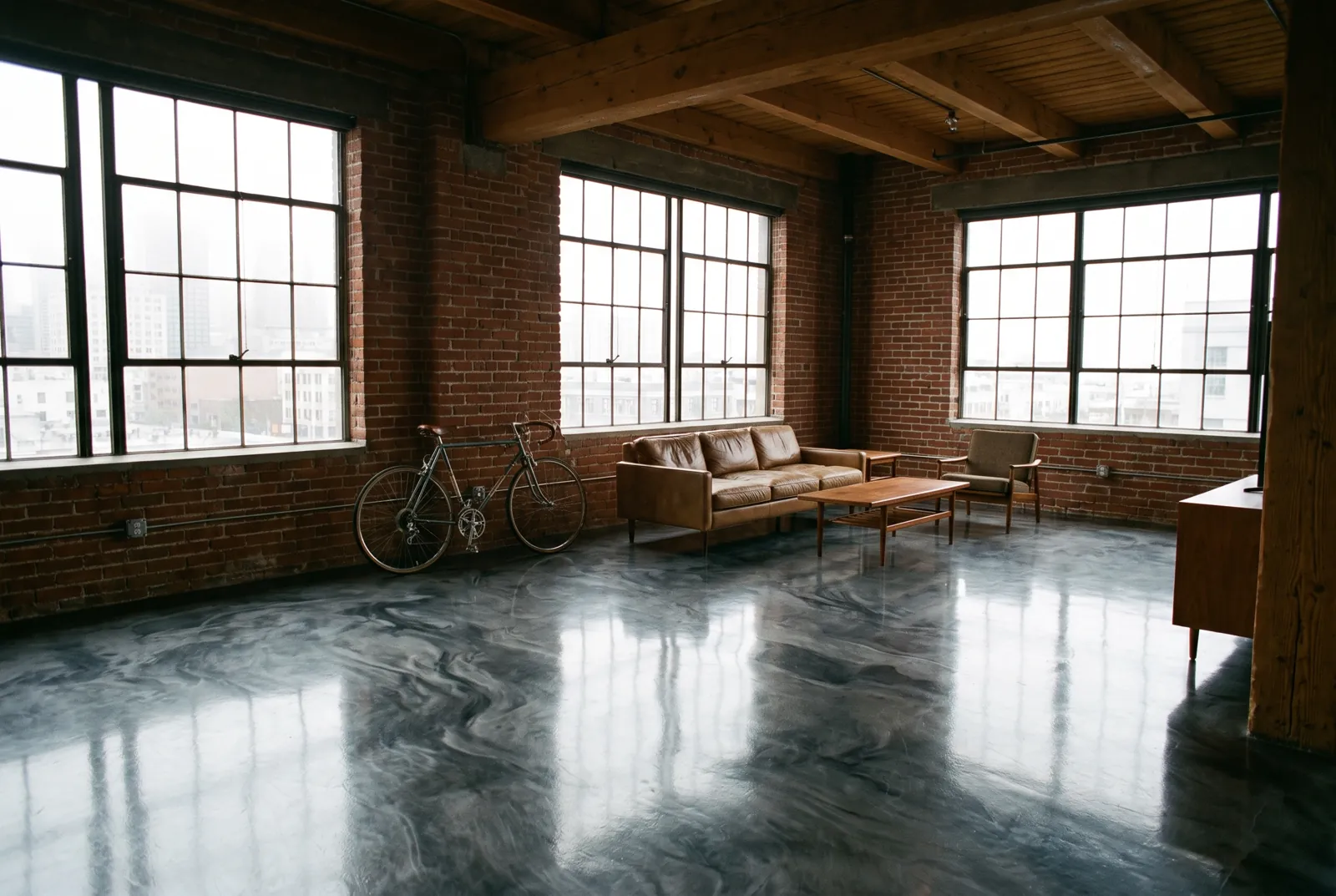
Hand-worked metallic pigment for lofts, studios, showrooms and garage gyms that should look as good as the rest of the home.
Metallic epoxy flooring details
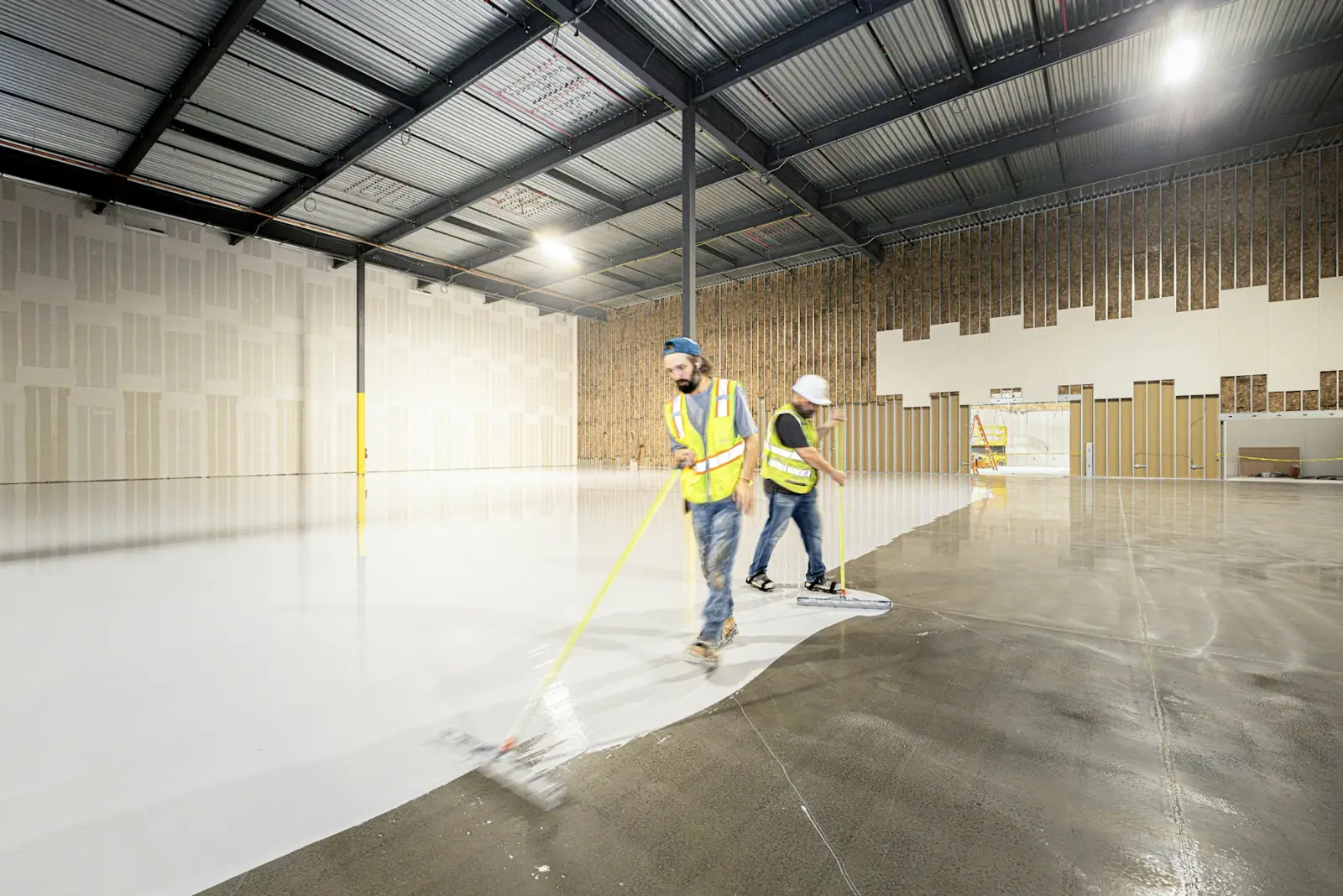
Seamless, washable systems with coved base for restaurants, breweries, retail and offices, installed around your hours.
Commercial epoxy flooring detailsMost calls start with one of these situations.
Garage floor paint and DIY kits often lift under hot tires within a year or two. Once the edges curl, the peeling keeps spreading across the floor.
Bare concrete gives off fine gray dust and soaks up oil and water. In a garage that doubles as laundry room and front entry, that grit ends up all over the house.
Many buildings with ground-floor garages have been through a soft-story retrofit that left new footings, patched concrete and a messy floor. It's the natural moment to repair the slab and coat it.
When space is tight, the garage turns into the home gym, bike shop or studio. A bright, sealed floor makes it feel like part of the house instead of overflow storage.
Buyers walk straight through the garage in many homes here. A clean, finished floor is one of the quicker upgrades to finish before a listing goes live.
Food facilities need floors that are smooth, durable and easy to clean, with a sealed base where floor meets wall. A seamless resin system checks those boxes.
A typical one- or two-car garage takes one to two days on site. Here's what happens from the first call to parking on the new floor.
We measure the floor, check every crack, test the slab for moisture and ask how you use the space. You get a written quote before anything is scheduled.
A compact grinder with a HEPA vacuum removes old paint, sealer and stains and opens up the concrete. Dust goes into the vacuum, not up the stairs into your home.
Cracks, pits and broken joints are filled with a fast-setting repair material and ground flush, so they don't telegraph through the finish.
The base coat goes down, followed by color flakes, a solid tint or metallic pigment, depending on the system you chose.
A UV-stable topcoat seals everything in. Fine anti-slip grit can be mixed in for entries and areas that get wet.
Foot traffic the next day and cars back in after one to a few days, depending on the system. We walk the finished floor with you before we leave.
Planning around the fog: the west side of the city stays cool and damp most of the year, and resin cures slowly on a chilly slab. We check slab temperature and dew point before every coat, and we schedule around your street-sweeping day so the work van and your car both have somewhere to go.
Single-car bays, tandem garages, steep driveways and a water heater in the corner are normal here. Our equipment fits through a standard garage door and works right up to the walls.
Old dune sand on the west side and bay fill in the Marina and Mission Bay can push moisture up through older slabs that have no vapor barrier. Every floor gets a moisture test, and a moisture-blocking primer goes down when readings call for it.
Row houses and flats share walls and stairwells with neighbors. We use low-odor, high-solids coatings that meet Bay Area air quality rules, and we keep the work sealed off from the living space.
Every floor is quoted after we see it in person, and the estimate is free. These are the things that shape your quote:
You get a written quote at the visit with every line item explained, so there are no surprises on install day. Request your free on-site estimate or call (415) 792-5106.
A floor coating fits most garages and commercial floors, but not every slab or situation. Here's an honest way to tell.
Not sure which system fits your floor? Compare them on our floor coating services page, or read about one-day polyaspartic garage coatings.
Most San Francisco garages sit at street level under the living space, and many double as storage, a workshop, a laundry area or a home gym. That mix of uses is why the right garage floor coating matters more here than in a typical suburban garage that only holds a car.
A full-flake epoxy system is the most popular choice. The broadcast flakes hide dust and tire marks, add texture underfoot and stand up to the oil drips and hot-tire pickup that peel cheap roll-on paints. For garages that also serve as a gym or studio, a solid-color epoxy with a satin topcoat gives a cleaner look and is easy to mop. Polyaspartic topcoats are worth considering for parking pads and garages that get direct afternoon sun, because they resist yellowing and cure quickly.
The city’s older slabs bring their own issues. Concrete poured decades ago in the Sunset, Richmond and Excelsior often has hairline cracks, old paint or sealer, and moisture wicking up from below, especially in the foggy western neighborhoods. We moisture-test and diamond-grind every slab before choosing a system, and we fill cracks so they don’t show through the finish.
If you’re not sure which system fits your space, we’ll look at the floor during the free on-site estimate, talk through how you use the garage and recommend an option that matches the slab and your plans for the room.
Most of the city's garages were built before anyone imagined coating the floor. That changes how we work.
A garage in the Sunset or the Richmond is often a tuck-under space poured in the 1930s or 1940s, with a slab that slopes toward the sidewalk, a floor drain in the middle and decades of patches around the perimeter. Edwardian and Victorian homes in Noe Valley and the Mission may have a garage that was carved out of a ground-floor room long after the house went up, with concrete of several different ages meeting in one floor.
Each of those conditions needs a specific answer. Old, soft concrete is ground gently and primed with a penetrating epoxy that consolidates the surface before the body coat goes on. Slopes and drains are respected, not fought, so water still runs where it was designed to. Where two pours meet we cut and fill the seam with a flexible compound so it does not telegraph through the finish.
The city's fog is the final factor. Marine moisture migrates through old slabs with no vapor barrier, so we moisture-test every floor and use a mitigating primer where readings call for it. The right concrete coat for a 90-year-old San Francisco garage is not the same one that goes down on a new tract slab, and treating it as if it were is why so many coated floors in the city have peeled. Ours are built for the house they are in.
A lot of city garages belong to more than one household. Coating them takes coordination as much as craft.
Two- and three-unit buildings in the Inner Sunset, Bernal Heights and the Marina usually share a single ground-floor garage with assigned spaces, a bike corral and the building's recycling bins. Coating that floor means every owner's car is out at the same time, so we work with HOA boards and property managers to set a date, send notice to residents and arrange temporary street parking permits where the block needs them.
The work itself is phased so the building keeps functioning. Bikes and bins move to one side while we grind and coat the other, then swap. We mark assigned spaces and numbers back into the finished floor with a contrasting color so nothing is lost in the process. Trench drains and sump pits common in below-grade garages get a chemical-resistant edge detail so wash water does not undercut the finish.
For buildings with heavier use, such as a garage that doubles as a loading area for a ground-floor shop, we specify a thicker build with a urethane wear layer that handles hand trucks and dollies. A floor coating solution for a shared garage also has to be easy for a building janitor to maintain, so we leave written care instructions and recommend cleaners that will not haze the topcoat. Done right, it is one of the few building improvements every owner notices on day one.
The garage is often the first room guests see. The finish should look like it belongs to the house.
In a city where the front door is frequently beside the garage door, a coated floor is part of the home's curb appeal. For the painted Victorians of Alamo Square and the stucco Marina-style homes along the north side, homeowners often choose a solid-color or lightly flaked finish in a warm gray or sand that complements the exterior rather than shouting against it.
Modern homes and lofts in Dogpatch, Potrero Hill and SoMa tend to go the other way, with charcoal, pewter or a metallic finish that reads as polished stone under good lighting. Metallic systems are especially popular for garages that double as a gym or a studio, since the depth of the finish makes a small space feel larger.
Texture is the quiet decision that matters most in this climate. Fog and rain mean wet tires and wet shoes for much of the year, so we add a fine anti-slip aggregate to the topcoat on nearly every residential job. It is invisible in a glossy finish but noticeable the first time you step onto the floor from a rainy sidewalk. Well-built epoxy floors in San Francisco pair that safety with a look chosen for the house, and we bring color and flake samples to every estimate so you can see them against your walls and trim before deciding.
Plenty of San Francisco concrete sits below the garage, not in it.
A lot of homes in the Sunset, the Richmond and Bernal Heights have more than a parking bay down below. There is often a storage room behind the garage, a laundry corner, a workshop, or a ground-floor in-law unit carved out of what used to be open crawl space. Those slabs tend to be the oldest and most uneven concrete in the house, and they are usually damp, because they sit against the hillside or below the water table that fog keeps topped up.
That is why we test before we quote. A moisture reading tells us whether the floor needs a vapor-blocking primer, and a quick look at the walls tells us whether water is wicking in from outside. If it is, we will tell you, since no coating fixes a drainage problem. When the slab checks out, well-installed epoxy flooring turns a dusty, cold room into one you can actually use: no more cardboard boxes soaking up moisture, no more grit tracked upstairs.
For storage rooms we keep it simple with a durable solid color and a light texture. For in-law units and home offices, homeowners usually pick a smoother finish that feels like a real floor under bare feet. Either way, we cut the coating in cleanly around water heaters, sump pits and stairs, and we can usually finish a small room in the same visit as the garage.
Plenty of homes here do not have a flat driveway or a two-car garage with room to spare. Some garages sit at the bottom of a steep curb cut, some share a door with a neighbor, and some are so narrow that the car and a bike rack barely fit side by side. None of that rules out a coated floor. It just means install day takes a bit more planning.
Before we schedule, we ask where our van can park and how long it can stay. Grinding equipment and mixing stations need a few feet of space near the door, and on a busy block that can mean a temporary parking permit or an early start before street cleaning. We also check for a nearby outlet on its own circuit, since a diamond grinder pulls more power than most garage outlets expect.
Steep entries change how we finish the floor. Where the garage slopes toward the door, we add extra texture to the topcoat near the entrance so the surface stays grippy when tires roll in wet from the fog. Where the slab meets the sidewalk, we cut a clean edge so the coating does not chip at the threshold.
Everything that lives in the garage has to go somewhere for a few days, so we help you plan for that too. A well-planned epoxy flooring job usually wraps up in two or three visits, and we will tell you exactly when you can park again.
The price depends on the size of the floor, how much repair the concrete needs and which coating system you choose. We measure and moisture-test the slab at a free on-site estimate and give you a written quote before anything is booked.
Yes. Most single-car and tandem garages built under homes are a great fit for a coating. Our grinders and vacuums are compact enough to work in tight bays, and we cut the coating in neatly around water heaters, laundry hookups and stairs.
It affects the install, not the finished floor. Resin cures slowly on a cold, damp slab, so we check slab temperature and dew point before coating. On chilly jobs we often recommend a polyaspartic topcoat, which cures well at lower temperatures.
With a polyaspartic system, many garages are ready for cars the next day. A traditional epoxy system usually needs a few days before cars go back in. You get the exact timeline for your floor at the estimate.
A professionally installed coating over a properly ground slab usually lasts 15 to 20 years in a home garage. The clear topcoat takes most of the wear and can be scuffed and recoated later instead of redoing the whole floor.
We use low-odor, high-solids coating systems that meet Bay Area air quality limits on solvent content. You may notice a mild smell on install day, and we keep the garage door cracked and the interior door closed while the coating cures.
Yes. Diamond grinding opens the surface so the resin bonds into the concrete instead of sitting on top of it. Acid etching alone is a weaker substitute and one of the most common reasons DIY garage coatings peel.
A smooth gloss finish can get slick when wet. Flake floors have a natural texture, and fine anti-slip grit can be added to the topcoat for garages that see rain tracked in, entry areas and commercial kitchens.
Call for a free on-site estimate — we'll measure, test the slab and leave you a written quote.
Call (415) 792-5106 for a Free Estimate Request an Estimate Online447 Sutter St Suite 411, San Francisco, CA 94108
Please note: This is our service business address — not a storefront or showroom. San Francisco Epoxy Flooring is a mobile epoxy flooring service, so we come to you and the office isn’t open to walk-in visitors. Call us and we’ll set up a free on-site estimate.